Quick answer:
Japan has over 56,000 convenience stores open 24/7, and the food quality rivals many restaurants. The Big 3 are 7-Eleven, FamilyMart, and Lawson. Expect to spend ¥300-600 for a filling meal. 7-Eleven has the best ATMs for foreign cards. Go during evening hours for 20-50% markdowns.
As of May 2026. Prices are approximate and vary by region and season.
If you've never been to Japan, the phrase "convenience store" probably brings to mind a gas station shop with dusty chips and lukewarm hot dogs. Forget all of that. Japanese convenience stores — called konbini — are an entirely different experience, and they will genuinely become one of the highlights of your trip.
This guide covers everything: the best foods to try, surprisingly useful services, how the Big 3 chains compare, and the etiquette tips that will make your konbini visits smooth from day one.
01Japan's convenience stores are not what you expect
Japan has more than 56,000 convenience stores nationwide. That's roughly one for every 2,200 people. In central Tokyo or Osaka, you're rarely more than a 2-minute walk from one. They are open 24 hours a day, 365 days a year — including holidays, typhoons, and the middle of the night.
But what makes Japanese konbini genuinely special isn't the convenience. It's the quality. The food is fresh, made daily (sometimes multiple times a day), and prepared to a standard that would embarrass many sit-down restaurants in other countries. The rice in an onigiri is properly seasoned. The egg sandwich is creamy and soft in a way you didn't think was possible from a store shelf. The fried chicken is hot, crispy, and seasoned perfectly.
The three major chains — 7-Eleven (Seven & i Holdings), FamilyMart, and Lawson — collectively account for the vast majority of stores. Each has its own strengths, but all three maintain an impressively high baseline of food quality and store cleanliness. You'll find yourself choosing favorites, and that's part of the fun.
For many tourists, the daily konbini visit becomes a ritual. A morning coffee and egg sandwich before sightseeing. A late-night onigiri after a long day of walking. It's affordable, it's reliable, and it's honestly delicious.
See how convenience store meals fit into your total Japan trip budget.
Open Budget Estimator →02Best foods to try
This is the section you'll come back to during your trip. Here are the must-try items, with real prices so you can plan your budget.
Onigiri (rice balls) — ¥120-180
The ultimate konbini snack. Triangular rice balls wrapped in crispy nori seaweed, with fillings like salmon (sake), tuna mayo, pickled plum (umeboshi), or seasoned cod roe (mentaiko). The packaging is ingeniously designed to keep the nori separate from the rice until you open it, so it stays crispy. Start with tuna mayo if you're unsure — it's the best-selling flavor for a reason.
Bento boxes — ¥400-600
Complete meals in a box: rice, a main protein (tonkatsu, grilled salmon, chicken karaage), and side dishes. The variety rotates regularly, and seasonal limited editions keep things interesting. These are full meals that will keep you going for hours. Ask the cashier to heat it up — they'll microwave it for you right at the counter.
Egg sandwiches (tamago sando) — ¥200-300
Japan's egg sandwiches are legendary among travelers, and for good reason. Fluffy white bread (no crusts), filled with a creamy, slightly sweet egg salad. The 7-Eleven version is widely considered the best, but FamilyMart and Lawson both make excellent versions. This is the food that converts people who thought they didn't like egg sandwiches.
Nikuman (steamed buns) — ¥150
Hot steamed buns filled with seasoned pork, available at the counter near the register. Perfect for cold-weather trips. You'll also find pizza-flavored, curry-flavored, and seasonal varieties. They're kept warm in a steamer, so they're ready to eat immediately.
Oden (winter only) — ¥80-150 per item
A simmering pot of broth with various items: boiled eggs, daikon radish, fish cakes, konnyaku, and more. Available roughly from October through March. You pick what you want, and the staff ladles broth over it. A warming, comforting snack on a cold day. Typically ¥80-150 per piece, so you can assemble a filling meal for under ¥500.
Karaage-kun (Lawson exclusive) — ¥220
Bite-sized fried chicken nuggets sold in a small box. The regular flavor is excellent, but limited-edition flavors (cheese, lemon, regional specialties) rotate frequently. This is Lawson's signature hot snack and a genuine crowd-pleaser.
Seasonal limited items
Japanese konbini constantly release limited-edition products tied to seasons, holidays, and collaborations. Spring brings sakura-flavored desserts. Autumn features sweet potato and chestnut treats. Keep an eye on the "new arrivals" shelf near the entrance — these items sell out fast and won't be back once the season ends.
See our complete Japan food guide for restaurant recommendations and regional specialties beyond convenience stores.
03Beyond food — services you didn't know existed
Japanese convenience stores are closer to a miniature city hall than a snack shop. The range of services available will surprise you, and several of them are genuinely useful for tourists.
ATMs that work with foreign cards
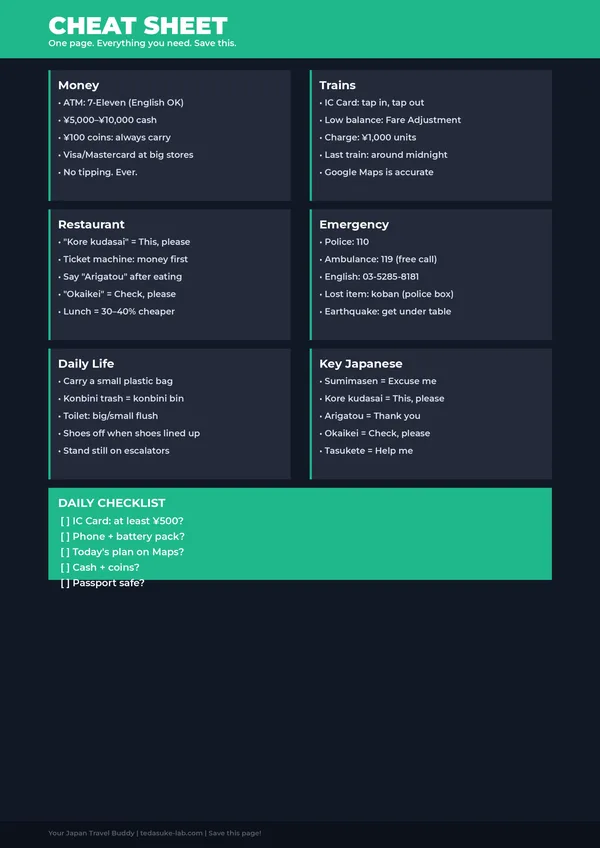
This is the big one. 7-Eleven ATMs (operated by Seven Bank) are the most reliable ATMs in Japan for withdrawing cash with foreign-issued debit and credit cards. They support Visa, Mastercard, Maestro, Cirrus, Plus, and UnionPay. The interface is available in English, and the fees are reasonable. If you need cash in Japan — and you will, because many small restaurants and shops are still cash-only — head to the nearest 7-Eleven. FamilyMart and Lawson ATMs also accept some foreign cards, but 7-Eleven is the most consistently reliable.
For more details on cash and payment in Japan, see our Japan cash guide.
Ticket printing (Loppi / Fami-Port)
Lawson has Loppi terminals and FamilyMart has Fami-Port machines that let you print tickets for concerts, theme parks, highway buses, and events. Some ticket reservation systems (like highway bus bookings) actually require you to pick up and pay at a konbini terminal. The interfaces have English options on most machines.
Shipping luggage (takkyubin)
You can ship luggage between hotels using the takkyubin delivery service available at most konbini. Fill out a shipping form, pay at the register, and your suitcase will arrive at your next hotel the following day. This is incredibly useful when traveling between cities — you can explore Kyoto without dragging a suitcase through the temple district. Costs roughly ¥1,500-2,500 depending on size and distance.
Free WiFi
Most 7-Eleven, FamilyMart, and Lawson locations offer free WiFi, though connection quality and time limits vary. It's a useful backup if your eSIM or pocket WiFi dies, but don't rely on it as your primary internet connection. Sessions are typically limited to 20-60 minutes.
Phone charging
Many konbini sell portable battery packs and charging cables. Some locations also have charging stations or rental battery services where you can borrow a charged battery pack and return it at any participating store.
Printing and copying
Multi-function printers at the back of the store can print documents, photos, and even boarding passes from a USB drive or your phone (via WiFi). Useful if you need a hard copy of a reservation confirmation or a map.
Paying bills
Less relevant for tourists, but worth knowing: Japanese residents pay utility bills, insurance premiums, and online shopping invoices at konbini counters. If you receive a payment slip for anything during your stay (some rental services or event tickets), you can pay it at any convenience store.
Make sure you're prepared before you arrive — 30 things to do before your trip.
View Checklist →04The Big 3 compared
All three major chains are excellent, but each has distinct strengths. Here's an honest side-by-side comparison to help you decide which one to walk into when you see all three on the same block (and you will).
| 7-Eleven | FamilyMart | Lawson | |
|---|---|---|---|
| ATMs | Best for foreign cards | Some accept foreign cards | Some accept foreign cards |
| Coffee | Best (machine-brewed) | Good | Good (Machi Café) |
| Food quality | Excellent overall | Excellent fried food | Excellent desserts |
| Best item | Egg sandwich, onigiri | Famichiki (fried chicken) | Karaage-kun, desserts |
| Unique feature | Seven Bank ATM | Muji product corner | Natural Lawson (healthy) |
| Store count | ~21,000 | ~16,000 | ~14,000 |
7-Eleven — the all-rounder
The largest chain and the most tourist-friendly thanks to Seven Bank ATMs that reliably accept foreign cards. The in-store brewed coffee (Seven Café) is genuinely good and costs just ¥110 for a regular. Food quality is consistently high across all categories — onigiri, sandwiches, bento, and desserts are all strong. If you can only remember one chain, make it 7-Eleven.
FamilyMart — the fried chicken champion
Famichiki is FamilyMart's signature fried chicken, and it has a devoted following. It's a juicy, well-seasoned piece of chicken breast in a crispy coating, sold hot at the counter for about ¥200. FamilyMart also has a unique partnership with Muji — many stores have a small section selling Muji snacks, stationery, and travel essentials. Their frappe drinks are popular in summer.
Lawson — the dessert specialist
Lawson's dessert game is on another level. Their premium roll cakes, cheesecakes, and seasonal sweets are genuinely pastry-shop quality. Karaage-kun (bite-sized fried chicken) is their signature hot snack. Lawson also operates Natural Lawson, a health-focused sub-brand with organic options, salads, and lower-calorie meals — though Natural Lawson locations are mostly found in central Tokyo.
For tourists, 7-Eleven is the most practical choice thanks to reliable ATMs and consistently excellent food. But honestly, try all three — part of the fun is discovering your personal favorite. Many travelers end up developing strong opinions about which chain makes the best onigiri, and there's no wrong answer.
05Convenience store breakfast — skip the hotel
Here's an insider tip that will save you serious money: skip the hotel breakfast and eat at a konbini instead.
Most hotels in Japan charge ¥1,500 to ¥3,000 per person for breakfast. At a 7-Eleven, you can build a genuinely satisfying breakfast for under ¥500. Here's the math:
That's a coffee, a sandwich, and a rice ball for under ¥500. For a 7-day trip with two people, switching from hotel breakfast to konbini breakfast could save you ¥14,000-35,000 (— roughly $90-230 USD). That's enough for a nice dinner at a proper restaurant, or a half-day guided tour.
The 7-Eleven coffee machines brew fresh cups on demand. You select your size, pay at the register, and get a cup to use at the machine. The regular hot coffee (¥110) is smooth, properly hot, and honestly better than what many hotels serve at their breakfast buffets. Iced coffee is available in summer for the same price.
For a more substantial breakfast, grab a bento instead of a sandwich. A salmon or chicken bento (¥400-500) with a coffee (¥110) is a full meal for about ¥550.
Use our budget estimator to calculate exactly how much you'll save over your entire trip.
Beyond convenience stores — restaurants, street food, and regional specialties.
Read Food Guide →06Money-saving strategies
Konbini food is already cheap, but there are ways to make it even cheaper. These tips can cut your convenience store spending by 20-30% without sacrificing anything.
Evening markdowns: 20-50% off
This is the biggest money saver. Convenience stores discount items approaching their sell-by date, typically in the evening hours (roughly 7-10 PM, though timing varies by store). You'll see small discount stickers — usually yellow or red — placed on bento boxes, sandwiches, onigiri, and prepared foods. Discounts range from 20% to 50% off. The food is still perfectly fresh; it simply needs to be sold before the expiration time printed on the label.
Loyalty apps
Each chain has a loyalty program: 7-Eleven has the 7-Eleven app with nanaco points, FamilyMart has FamiPay, and Lawson has Ponta points. Setting these up as a tourist is a bit of effort, but if you're staying for more than a week, the accumulated points and app-exclusive coupons can add up. The Lawson Ponta card is the easiest to get — you can pick up a physical card at any Lawson and start earning points immediately with no registration required.
Seasonal and limited items
This sounds counterintuitive, but seasonal items are often promotional and priced competitively. Convenience stores use limited editions to drive foot traffic, which means new seasonal products are frequently priced the same as (or lower than) standard items despite being higher quality. Watch for them.
Tax-free shopping at select locations
Some convenience store locations in tourist areas offer tax-free shopping for purchases over ¥5,000 (excluding food and drinks consumed in Japan). This applies mainly to cosmetics, snacks for souvenirs, and non-food items. Look for the "Tax Free" sign in the window. You'll need your passport. Note: this is not available at every location, and the ¥5,000 minimum makes it mainly useful if you're buying souvenirs or stocking up on Japanese snacks to bring home.
Looking for more ways to save? Our Japan cash guide covers ATM fees, the best payment methods, and how to avoid unnecessary charges throughout your trip.
07Etiquette & practical tips
Japanese convenience stores are easy to navigate, but knowing these unwritten rules will make your experience smoother and avoid any awkward moments.
Microwave and utensils
When you buy a bento or any item that should be heated, the cashier will ask if you want it warmed up: "Atatamemasu ka?" (温めますか?). Just nod or say "hai" (yes). They'll microwave it behind the counter. For cold items, they won't ask — so if you want something heated, point to it and gesture or say "atatamete kudasai" (please heat this up).
Chopsticks (ohashi) and plastic utensils are provided free with your purchase. The cashier will ask if you need them, or you can request them. Some stores have a small self-serve station with soy sauce packets, chopsticks, and wet towelettes.
Where to eat
Most Japanese convenience stores do not have indoor seating. Don't unwrap your food and eat it inside the store — it's generally not done and you'll get looks. Instead, eat at your hotel, at a bench outside, or at a nearby park. Some larger stores and locations near train stations do have a small eat-in area (look for a counter with stools near the window), but these are the exception, not the rule.
Plastic bags cost money
Since Japan's plastic bag charge was introduced, convenience stores charge ¥3-5 for a plastic bag. The cashier will ask if you want one: "Fukuro wa irimasu ka?" (袋はいりますか?). If you don't need a bag, say "Fukuro iranai desu" (袋いらないです) or simply wave your hand and shake your head. Bringing a small reusable bag is both eco-friendly and saves you a few yen each visit.
Payment
All three major chains accept credit cards (Visa, Mastercard), IC cards (Suica, Pasmo), and various mobile payments. Cash is also always accepted. Place your payment in the small tray on the counter — don't hand cash directly to the cashier.
Be quick at the register
Japanese convenience stores move fast, especially during morning rush hours. Have your payment ready, know whether you want a bag, and step aside promptly once your transaction is done. It's not rude to be fast — it's appreciated.
Don't block the aisles
Konbini aisles are narrow. If you need time to browse (and you will — there's a lot to look at), be mindful of other customers trying to get past you. Step to the side when someone approaches.
Japanese convenience stores will become one of your favorite parts of visiting Japan. The food is genuinely good, the prices are low, and the experience is unlike anything back home. Visit often, try everything, and don't skip the egg sandwich.
Nervous about ordering at restaurants? Our guide covers everything from ticket machines to table etiquette.
Read Ordering Guide →Tax-free shopping, souvenir ideas, and what to buy at konbini for gifts back home.
Open Shopping Helper →