Planning a trip to Japan? There's a lot to sort out before you board that flight. This checklist covers everything from passport checks to what to do when you land — in the order you should tackle them.
Tap each item to check it off. Your progress is saved automatically.

PHASE 1Before you book
Get the big decisions out of the way first. These determine everything else.
- 01 Decide how many days you need. 7 days is the sweet spot for first-timers (Tokyo + Kyoto/Osaka). Use the Trip Days Planner to calculate.
- 02 Set a realistic daily budget. Expect ¥10,000-20,000/day for mid-range travel. Use the Budget Estimator to plan yours.
- 03 Check passport validity. Your passport must be valid for at least 6 months beyond your travel dates. Renew now if needed — it takes 4-6 weeks.
- 04 Research visa requirements. Most countries get visa-free entry for up to 90 days. Check Japan's Ministry of Foreign Affairs website for your nationality.
- 05 Book flights. Fly into Narita (NRT) or Haneda (HND). Consider open-jaw routing: fly into Tokyo, out of Osaka (or vice versa) to avoid backtracking.
Open-jaw flights (Tokyo in, Osaka out) can save you an entire day of travel — and often cost the same as a round trip. Always check multi-city searches.
PHASE 21-2 months before
The logistics phase. Get bookings, tech, and money sorted while prices are still reasonable.
- 06 Book hotels early. Popular areas (Shinjuku, Kyoto Station) sell out fast. Booking.com and Agoda have the best Japan inventory. Free cancellation policies are your friend.
- 07 Order a travel eSIM. Get a data eSIM before you leave (Ubigi, Airalo, or Mobal). Much easier than hunting for SIM cards at the airport. Activate it when you land.
- 08 Check JR Pass pricing for your route. The Japan Rail Pass is not always worth it. Compare the cost of individual Shinkansen tickets for your specific itinerary.
- 09 Download offline Google Maps for Japan. Open Google Maps → search "Japan" → Download offline map. Essential for navigation underground where data can be spotty.
- 10 Set up Suica on Apple/Google Wallet. Add a Suica (IC card) to your phone wallet before you go. Works on all trains, buses, and most convenience stores in Japan.
- 11 Get travel insurance. Medical care in Japan is excellent but expensive without insurance. Make sure your policy covers emergency medical and trip cancellation.
- 12 Reserve must-do restaurants. Top ramen shops and sushi counters don't take reservations, but kaiseki, teppanyaki, and popular spots do. Book via Tabelog or the hotel concierge.
- 13 Check seasonal events. Cherry blossoms (late March-mid April), autumn leaves (mid November), summer festivals (July-August). Time your trip to match if possible.
- 14 Notify your bank about Japan travel. Tell your bank and credit card company you're going to Japan. Otherwise, they may block your card for "suspicious foreign activity."
- 15 Get some cash yen. Japan is still cash-heavy. Bring ¥30,000-50,000 to start. 7-Eleven ATMs accept most international cards once you arrive for more.
Japan is more cash-dependent than you think. Many small restaurants, temples, and local shops are cash-only. Always carry at least ¥10,000 in your wallet.
Not sure how many days you need? Calculate the right trip length for your destinations.
Open Trip Days Planner →
PHASE 31 week before
Final preparations. Download, print, confirm, and pack.
- 16 Download a translation app. Google Translate with the Japanese offline pack. The camera translation feature is a lifesaver for menus and signs.
- 17 Save emergency numbers. Police: 110. Ambulance/Fire: 119. Japan Helpline (English): 0570-064-004. Save them in your phone contacts.
- 18 Print hotel address in Japanese. Taxi drivers may not read English addresses. Print or screenshot your hotel name and address in Japanese (kanji). Your hotel confirmation email usually has this.
- 19 Check weather forecast and pack accordingly. Japan's weather varies wildly by season. Summer is hot and humid (bring light clothes). Winter is cold and dry. Always pack a compact umbrella.
- 20 Confirm all reservations. Double-check hotel bookings, restaurant reservations, and any activity tickets. Save confirmation emails offline.
- 21 Pack a small towel. Many Japanese restrooms don't have paper towels or hand dryers. A small handkerchief-size towel is a daily essential.
- 22 Confirm eSIM activation / get pocket wifi. Test your eSIM if you ordered one. Or book a pocket wifi rental for airport pickup if you prefer a separate device.
Take screenshots of all confirmations, maps, and directions. You'll need them on the plane and in the airport before your data kicks in.

PHASE 4Day of departure
Essentials only. If you forget everything else, don't forget these five things.
- 23 Passport + visa docs. Keep your passport and any visa documents in your carry-on, not checked luggage. Make a photocopy as backup.
- 24 Phone charged + charger. Japan uses Type A plugs (same as US/Canada) at 100V. Most modern chargers work fine. No adapter needed for US travelers.
- 25 Cash yen. Have your yen ready in your carry-on. You'll need it for the airport bus or train to your hotel.
- 26 Comfortable walking shoes. You WILL walk 15,000-25,000 steps per day in Japan. Break in your shoes before the trip. Slip-ons are ideal (you remove shoes constantly).
- 27 Light bag / daypack. You'll carry this every day. A packable daypack with a water bottle pocket is perfect. Keep it under 5kg.
Japan's trains and streets are spotless. Carry your trash with you — public trash cans are extremely rare. A small plastic bag in your daypack helps.
PHASE 5When you arrive
First things to do after you clear immigration. Get connected, get transit, get moving.
- 28 Activate eSIM / pick up pocket wifi. Turn on your eSIM or grab your rental wifi at the airport counter. Test that you have data before leaving the terminal.
- 29 Get an IC card (Suica/Pasmo). If you didn't set up mobile Suica, buy a physical IC card at the airport station. Load ¥2,000-3,000 to start.
- 30 Get to your hotel. From Narita: Narita Express (~60 min, ¥3,250) or Skyliner (~40 min, ¥2,520). From Haneda: Tokyo Monorail or Keikyu Line (~30 min, ~¥500). Airport Limousine Bus is also reliable.
If you've checked off all 30 items, you're better prepared than 90% of first-time Japan visitors. Enjoy your trip — Japan rewards the prepared traveler.
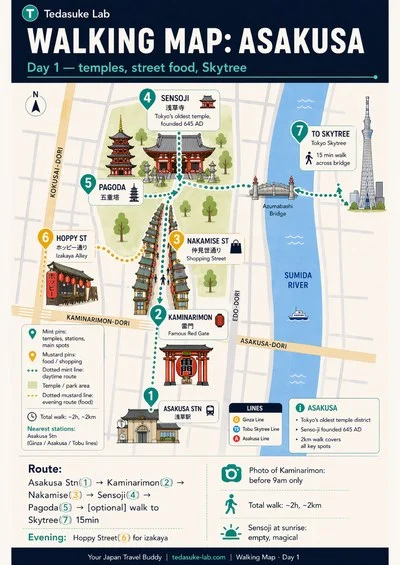
Want the exact routes and maps?
Plan your trip with illustrated walking maps and ready-to-follow routes.
See the complete guide →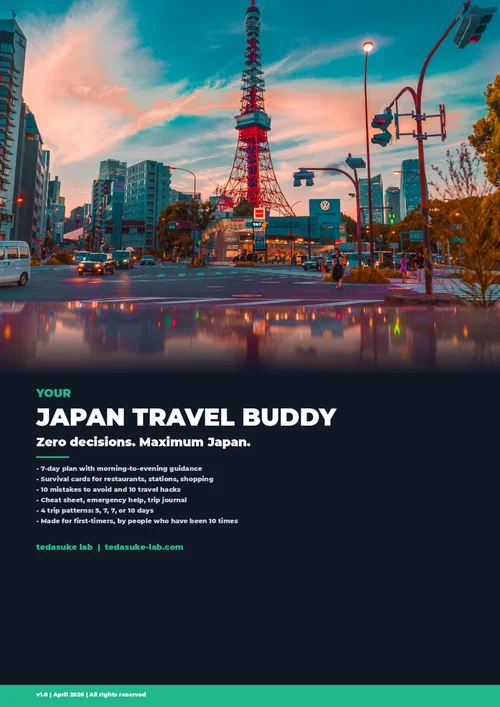
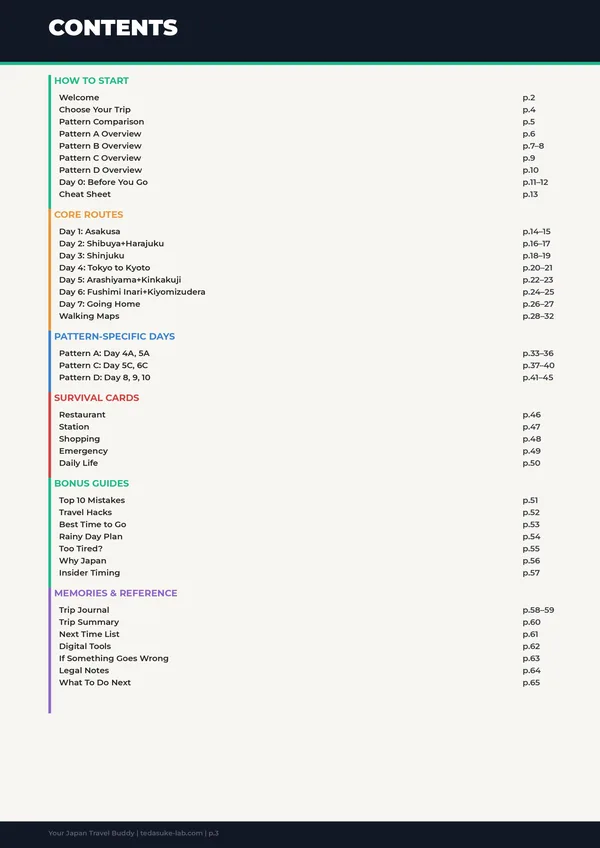
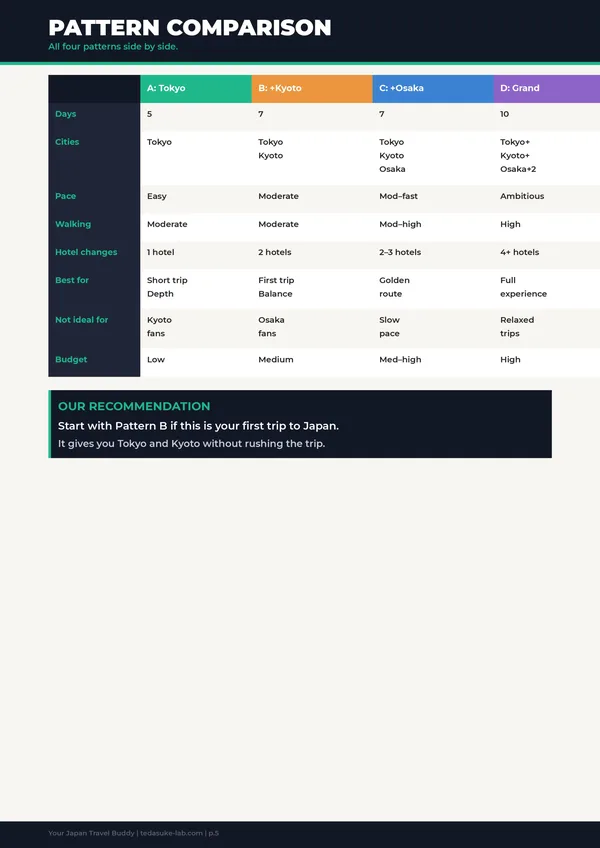
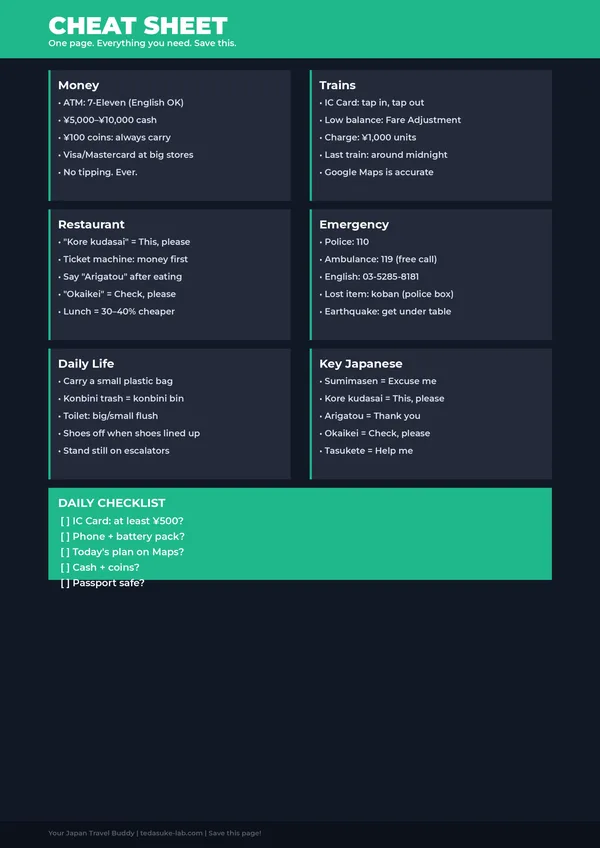
One-time payment · Instant download · Free updates forever