Quick answer:
You can eat incredibly well in Japan on any budget. Convenience store meals cost ¥300-600, chain restaurants ¥400-800, a proper ramen bowl ¥800-1,200, and a conveyor belt sushi lunch ¥1,000-2,000. Budget ¥2,000-3,000/day for cheap eats, ¥5,000-8,000 for comfortable dining.
As of May 2026. Prices vary by location, restaurant, and season. Tokyo is generally 10-20% more than other cities.
Food is the highlight of any Japan trip. That is not an exaggeration. Even the most budget-conscious travelers end up spending more on food than planned — not because things are expensive, but because everything looks so good that you want to try it all.
The quality floor in Japan is remarkably high. A ¥500 bowl of gyudon from a chain restaurant would be a respectable meal in most countries. A ¥150 convenience store onigiri is made with better rice than most restaurants abroad. This guide covers what to eat, where to find it, and exactly how much to budget.
Calculate your total Japan trip cost including meals, transport, and hotels.
Open Budget Estimator →01Japan's food scene — why it's the best part of your trip
Japan has more Michelin-starred restaurants than any other country. But the real magic is not at the top — it is in the middle and the bottom. The average meal in Japan is better than the average meal almost anywhere else, and the cheapest meals are shockingly good.
A few things make Japan's food scene different from what you are used to:
- Specialization is normal. Many restaurants do one thing. A ramen shop makes ramen. A tonkatsu shop makes tonkatsu. A soba shop makes soba. When someone has spent 20 years perfecting one dish, the result speaks for itself.
- Lunch is cheaper than dinner. The same restaurant that charges ¥3,000 for dinner often serves a ¥1,000 lunch set. Always check for lunch specials (ランチ, "ranchi").
- Presentation matters everywhere. Even a ¥400 convenience store bento is arranged with care. Food in Japan is visual — you eat with your eyes first.
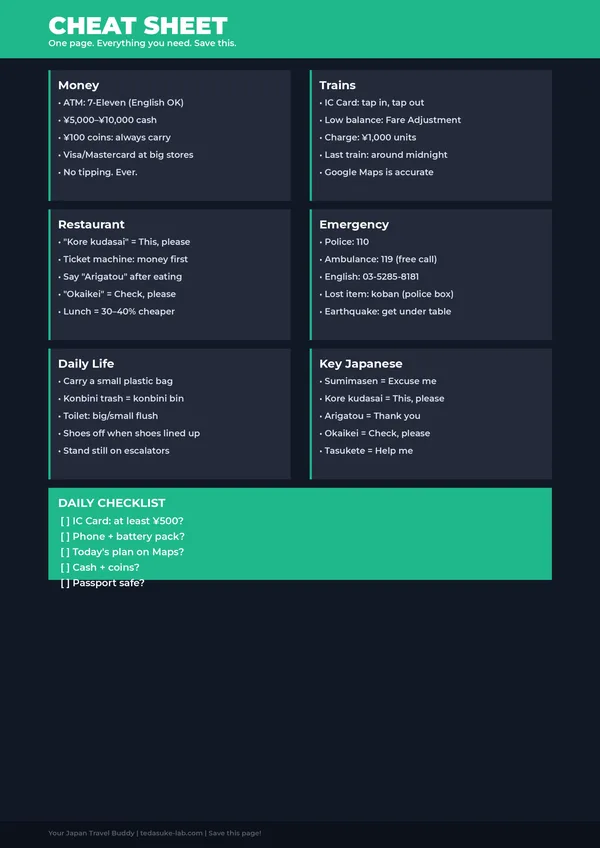
- Tipping does not exist. The price on the menu is the price you pay. No mental math, no awkward calculations. Service is excellent because that is the standard, not because of tips.
- Cash is still common. Many smaller restaurants, especially ramen shops and street food stalls, are cash-only. Always carry ¥5,000-10,000 in cash. See our Japan cash guide for details.
If you are wondering how to actually order at restaurants — ticket machines, pointing at menus, useful Japanese phrases — we have a separate guide: How to Order Food in Japan.
02Ramen — types, prices, what to order
Ramen is the dish most visitors are excited about, and Japan delivers. There are over 30,000 ramen shops across the country, from tiny 8-seat counters to famous chains with hour-long lines. A bowl typically costs ¥800-1,200 — one of the best value meals you will find anywhere.
The four main styles
Shoyu Ramen (soy sauce)
The classic. Clear brown broth, thin noodles, a clean savory flavor. This is the default in Tokyo and eastern Japan. If you are not sure what to order, start here.
Miso Ramen
Rich, slightly sweet, hearty broth. Originally from Sapporo in Hokkaido. Thicker noodles, often topped with butter and corn. Heavier than shoyu — great in cold weather.
Tonkotsu Ramen (pork bone)
Creamy, milky white broth made from pork bones boiled for hours. The signature style of Fukuoka and Kyushu. Thin, firm noodles. Rich and filling. This is the style that made ramen famous worldwide.
Tsukemen (dipping noodles)
Cold noodles served separately from a concentrated hot broth. You dip the noodles into the broth before eating. The flavor is more intense than regular ramen because the broth is not diluted. Portions are usually larger.
Practical tips
- Most ramen shops use ticket machines. Put in your money, press the button with a picture or name, hand the ticket to the cook. No Japanese needed.
- Extra noodles (kaedama) cost ¥100-200. At tonkotsu shops, you can order a second serving of noodles for your remaining broth.
- Toppings cost ¥100-300 each. Extra chashu (pork), egg (ajitama), nori, and green onions are the common additions.
- Slurping is expected. It cools the noodles and is considered a compliment to the chef. Do not be polite about this — slurp loudly.
03Sushi — beyond the stereotypes
Sushi in Japan ranges from ¥100 plates at a conveyor belt restaurant to ¥30,000+ omakase dinners at a counter with six seats. All of it is better than what you get at home. The real question is what kind of sushi experience you want.
Three tiers of sushi
Conveyor Belt Sushi (kaiten-zushi)
Plates travel past you on a belt, or you order from a touchscreen tablet. Chains like Sushiro, Kura Sushi, and Hamazushi are everywhere. The quality is genuinely good — the fish is fresh, the rice is properly seasoned, and you can eat until you are full for a very reasonable price.
Mid-range Sushi Restaurants
Counter or table seating, a chef preparing your order by hand. Higher quality fish, better rice technique, and a more personal experience. This is where the price-to-quality ratio is arguably the best. Many offer excellent lunch sets.
Omakase (Chef's Choice)
You sit at the counter, and the chef serves you a sequence of pieces based on what is freshest that day. This is a culinary experience, not just a meal. Reservations are essential — often weeks or months in advance for famous places.
Try conveyor belt sushi on day one — it is fun, affordable, and a great introduction. Then splurge on one mid-range sushi lunch later in your trip. Unless sushi is your main reason for visiting Japan, you do not need to spend ¥20,000+ on omakase to have an incredible sushi experience.
04Street food & festival food
Japan is not traditionally a street food culture — most Japanese eat seated, not walking. But tourist areas and festivals are packed with stalls, and some of the most memorable bites you will have cost under ¥500.
Takoyaki (octopus balls)
Crispy outside, molten inside, with a piece of octopus in the center. Topped with sauce, mayo, bonito flakes, and seaweed. Osaka is the spiritual home, but you will find them everywhere. Watch the vendor make them in the specialized griddle — it is part of the experience.
Yakitori (grilled chicken skewers)
Chicken pieces grilled over charcoal, seasoned with salt (shio) or sweet soy glaze (tare). Different cuts are available — thigh (momo), skin (kawa), cartilage (nankotsu), and many more. Found at dedicated yakitori stands and under train tracks in areas like Yurakucho in Tokyo.
Taiyaki (fish-shaped cake)
A fish-shaped pastry filled with sweet red bean paste (anko), custard cream, or chocolate. Warm, cheap, and available at small stands in almost every shopping street. The best ones have thin, crispy batter and generous filling.
Harajuku Crepes
Tokyo's Takeshita Street is lined with crepe shops. These are not thin French crepes — they are thick, folded into cones, and loaded with whipped cream, fruit, ice cream, chocolate, or all of the above. Sweet, ridiculous, and very Instagram-friendly.
Other street food worth trying: Imagawayaki (round filled cakes, ¥150-250), korokke (deep-fried potato croquettes, ¥150-300), nikuman (steamed pork buns, ¥200-350), and yaki-imo (roasted sweet potato, ¥300-500 — especially good in autumn and winter).
Need help figuring out what things cost overall? Our Japan trip cost breakdown covers food alongside transport, accommodation, and activities.
05Convenience store meals — seriously good quality
This is the section that surprises first-timers the most. Japanese convenience stores — 7-Eleven, Lawson, and FamilyMart — are nothing like convenience stores anywhere else. The food is genuinely good, made fresh daily, and absurdly affordable.
There are over 56,000 convenience stores across Japan. You are never more than a few minutes from one. Many travelers eat at least one meal a day from a konbini, and not because they are being cheap — because the food is that good.
What to get
- Onigiri (rice balls) — ¥120-180. The staple. Triangular rice balls wrapped in crispy nori with fillings like salmon, tuna mayo, umeboshi (pickled plum), or mentaiko (spicy cod roe). Each store has slightly different options. Buy two or three for a light meal.
- Bento boxes — ¥400-600. Complete meals in a box: rice, protein, pickles, and sides. Options change daily and seasonally. The karaage (fried chicken) bento is a reliable favorite.
- Sandwiches — ¥200-350. Japanese convenience store sandwiches are famously good. The egg salad sandwich (tamago sando) is the one everyone talks about — fluffy white bread, creamy egg filling. The fruit sandwiches are also excellent.
- Hot food counter — ¥100-300. Fried chicken (karaage), nikuman (steamed buns), fried potato croquettes, frankfurters. Ask the staff to heat items for you. Lawson's karaage-kun chicken nuggets are practically a national institution.
- Oden (winter only) — ¥80-150 per item. A hot pot with fish cakes, tofu, eggs, and daikon simmered in dashi broth. Available from autumn through spring. Point at what you want.
Convenience store meals can save you ¥1,000-2,000 per day compared to eating every meal at restaurants. A breakfast onigiri + coffee (¥300 total), a konbini lunch bento (¥500), and a proper restaurant dinner (¥1,500) means you eat well all day for under ¥2,500.
Most convenience stores accept IC cards (Suica/Pasmo) and credit cards, but it is still smart to carry cash. Read our Japan cash guide so you are never caught short.
Our shopping helper covers snacks, souvenirs, and tax-free purchases.
Open Shopping Helper →06Budget eats under ¥1,000
You can eat a full, hot, filling meal in Japan for under ¥1,000 at thousands of restaurants. These are not hidden gems — they are on every main street, near every station, open from morning to late at night. The quality is consistent because these are well-run chains with strict standards.
Gyudon Chains (beef bowl)
Yoshinoya, Matsuya, Sukiya — the "big three" of cheap, fast Japanese food. Thinly sliced beef simmered in sweet soy sauce, served over rice. A regular bowl (nami) is enough for most people. Matsuya includes free miso soup with every order.
Curry Houses
CoCo Ichibanya (CoCo Ichi) is the biggest chain, with hundreds of locations. Japanese curry is milder, thicker, and sweeter than Indian or Thai curry — closer to a hearty stew. Choose your rice amount, spice level, and toppings. A basic plate is filling; with toppings it is enormous.
Udon Chains
Marugame Seimen is the standout — you watch them make the noodles fresh, pick tempura from the counter, and pay at the end. Thick, chewy udon noodles in hot dashi broth. Add a piece of tempura or two from the self-serve counter for a complete meal.
Teishoku (set meal) Restaurants
Chains like Ootoya and Yayoi-ken serve balanced set meals: a main dish, rice, miso soup, and small side dishes. The quality feels closer to home cooking than fast food. More variety than gyudon chains, slightly higher prices.
Other budget options: Soba (buckwheat noodle) shops (¥400-700), kaiten sushi for a few plates (¥600-1,000), and bakeries (¥150-300 per item). Department store basement food floors (depachika) sell premium items at discount before closing time — check around 7-8pm for markdowns.
07Izakaya — the Japanese pub experience
An izakaya is a Japanese-style pub where you go with friends, order drinks and lots of small dishes to share, and stay for hours. This is how most Japanese adults eat dinner socially, and it is one of the most fun dining experiences you can have in Japan.
What to expect
- Table charge (otoshi) — ¥300-500. Most izakaya charge a small fee per person that comes with a small appetizer you did not order. This is normal and expected — it is not a scam. Think of it as a cover charge.
- Shared plates. Unlike Western dining where everyone orders their own meal, izakaya food is ordered for the table and shared. This means you can try many different things in one evening.
- Drink-all-you-can (nomihoudai) — ¥1,500-2,500. Many izakaya offer unlimited drinks for a set time (usually 90-120 minutes). Beer, highballs, sake, shochu, and soft drinks are typically included. This is excellent value if you drink.
- Food-and-drink course sets — ¥3,000-5,000. A fixed price that includes nomihoudai plus a set menu of dishes. The most economical way to experience an izakaya, and the easiest to order.
What to order
- Edamame — steamed salted soybeans. The universal starter.
- Karaage — Japanese fried chicken. Crispy, juicy, and always good.
- Yakitori — grilled chicken skewers in various cuts.
- Sashimi plate — fresh raw fish, usually the best quality item on the menu.
- Agedashi tofu — deep-fried tofu in dashi broth. Light and savory.
- Tamagoyaki — rolled Japanese omelet. Sweet, fluffy, and comforting.
- Shime (finishing dish) — end with rice, ochazuke (rice in tea broth), or ramen to fill up.
Plan ¥3,000-5,000 per person for a full izakaya experience with drinks. Chain izakaya like Torikizoku, Watami, and Kin no Kura are cheaper (¥2,000-3,000). Independent izakaya with better food and atmosphere tend to be ¥4,000-6,000.
Izakaya menus are often in Japanese only, especially at smaller places. Our ordering guide has the key phrases and a menu translator cheat sheet.
Factor in dining, drinks, and everything else for your trip.
Open Budget Estimator →08Regional specialties worth traveling for
Every region in Japan has dishes you cannot find anywhere else — or at least, cannot find done as well. Some of these are worth building your itinerary around.
Osaka — Okonomiyaki & Kushikatsu
Osaka calls itself "Japan's Kitchen" (tenka no daidokoro), and it earns the title. Okonomiyaki is a savory pancake made with batter, cabbage, and your choice of fillings (pork, seafood, cheese), cooked on a hot griddle at your table. Kushikatsu are deep-fried skewers of meat, vegetables, and seafood — dip once in the communal sauce, never double-dip.
Hiroshima — Hiroshima-style Okonomiyaki
Do not call this "Osaka-style." Hiroshima okonomiyaki is layered, not mixed — thin crepe, heaps of cabbage, noodles, pork, and egg, all stacked and pressed on the griddle. The noodle layer makes it heartier. The Okonomimura building in Hiroshima has multiple floors of competing shops — go hungry.
Kyoto — Kaiseki & Yudofu
Kaiseki is Japan's haute cuisine — a multi-course meal that follows seasonal ingredients and centuries of tradition. Beautiful presentation, delicate flavors, and a meditative pace. Kyoto is the spiritual home of kaiseki. For something simpler, try yudofu (hot tofu) at temples in the Nanzenji area — surprisingly satisfying.
Hokkaido — Seafood & Soup Curry
Hokkaido's cold waters produce some of Japan's best seafood — uni (sea urchin), crab, scallops, and salmon. The Nijo Market in Sapporo and the morning market in Hakodate serve seafood donburi (rice bowls) that are worth the trip alone. Sapporo is also home to soup curry — a lighter, more fragrant curry served as a brothy soup with vegetables.
Fukuoka — Yatai & Hakata Ramen
Fukuoka's yatai are open-air food stalls set up along the river each evening. Squeeze onto a bench, order Hakata-style tonkotsu ramen, yakitori, or gyoza, and eat elbow-to-elbow with locals and travelers. The ramen here is the original tonkotsu — milky pork bone broth with thin, firm noodles. Order kaedama (extra noodles) for ¥100-150.
Also worth seeking out: Nagoya's miso katsu and hitsumabushi (grilled eel), Kagoshima's kurobuta (black pork) tonkatsu, Sendai's gyutan (beef tongue), and Kanazawa's kaisen-don (seafood bowl) at Omicho Market.
Daily food budget summary
| Budget Level | Breakfast | Lunch | Dinner | Daily Total |
|---|---|---|---|---|
| Budget | Konbini ¥300 | Chain ¥500 | Ramen ¥1,000 | ¥1,800-2,500 |
| Comfortable | Cafe ¥500 | Set meal ¥1,000 | Izakaya ¥3,500 | ¥4,500-6,000 |
| Splurge | Hotel ¥1,500 | Sushi ¥3,000 | Kaiseki ¥15,000 | ¥10,000-20,000+ |
Add food costs to flights, hotels, transport, and activities for your complete trip estimate.
Open Budget Estimator →Want the exact routes and maps?
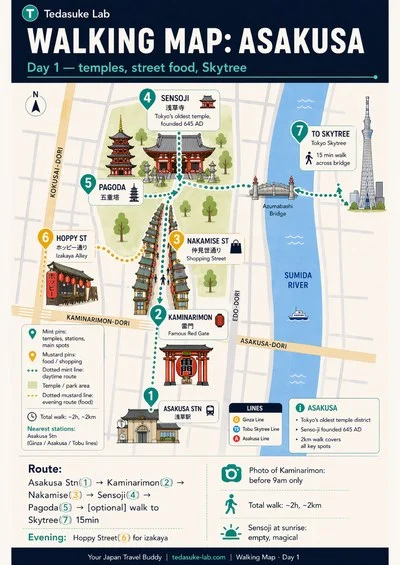
Plan your trip with illustrated walking maps and ready-to-follow routes.
See the complete guide →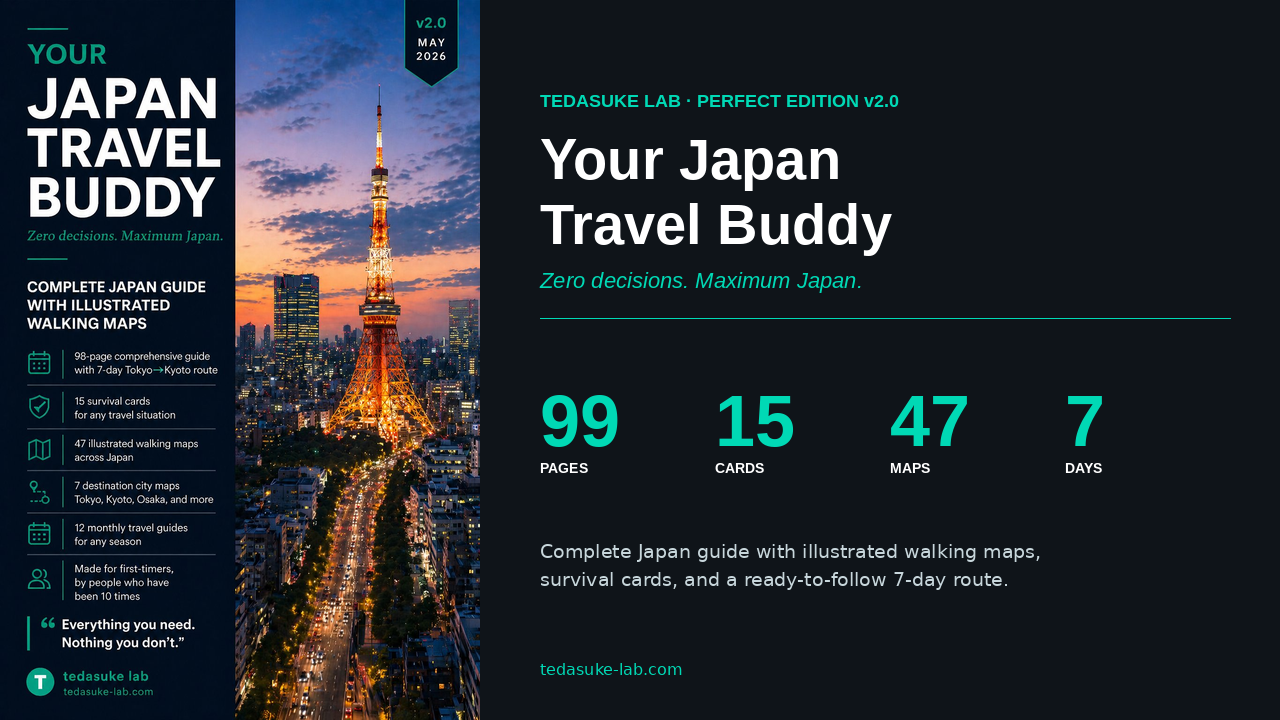
One-time payment · Instant download · Free updates forever