Tokyo's public transit looks intimidating on a map. Dozens of lines, two metro systems, JR trains, private railways — it's a lot. But here's the truth: it's actually one of the easiest cities in the world to get around, once you know the basics.
This guide covers everything a first-time visitor needs: how trains work, which card to get, what to skip, and how much you'll actually spend per day.
東京の交通は路線図を見ると複雑そうですが、基本を押さえれば世界一使いやすい都市交通です。初訪日で知っておくべきことをすべてまとめました。
01The basics
Tokyo has the best public transit system in the world. Trains are the main way to get around — they're clean, on time (literally to the minute), and cover virtually every part of the city.
There are three main train systems you'll use:
JR (Japan Railways)
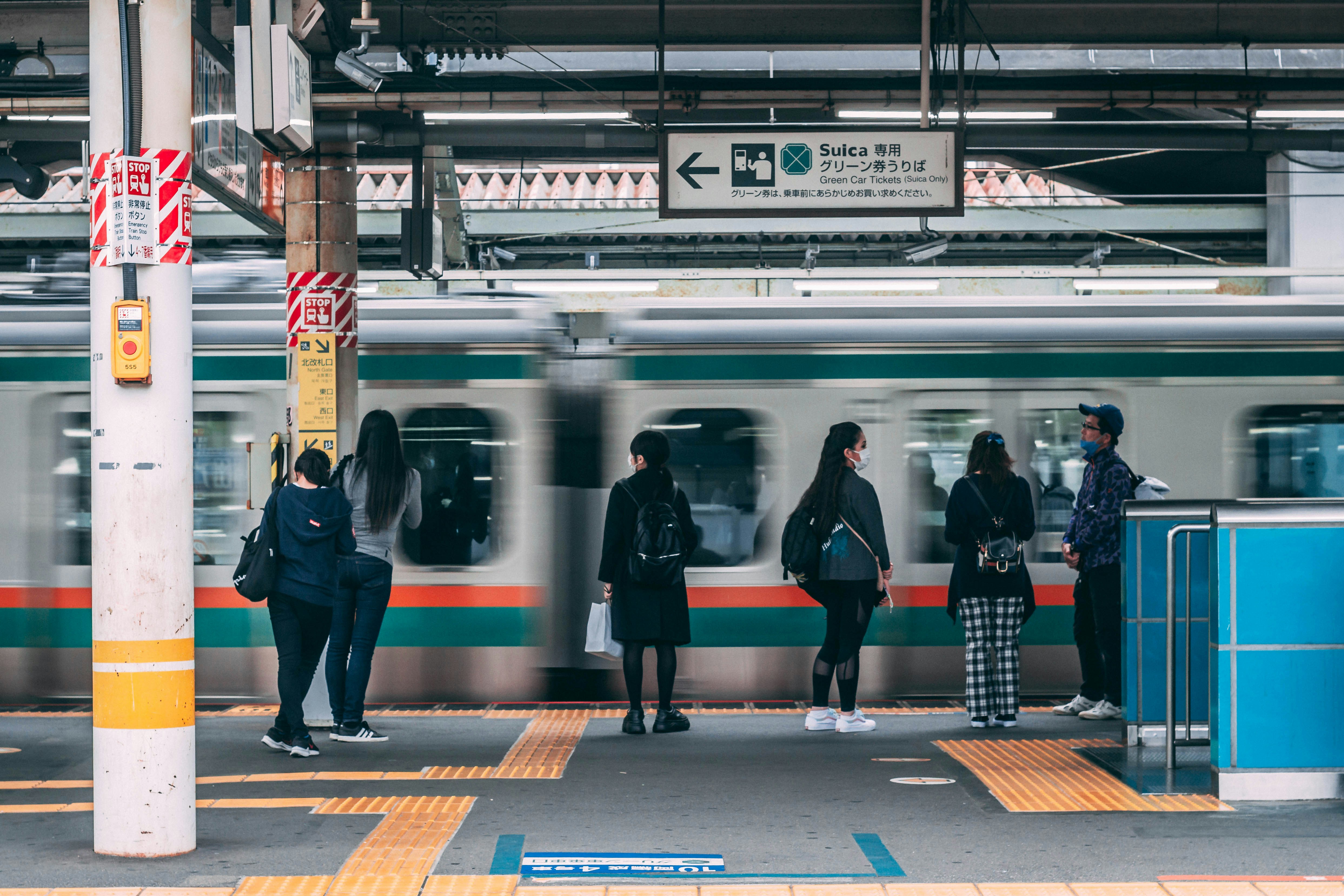
The big one. JR runs the famous Yamanote Line (the circular loop) and many other lines. Green logo. Covers most major stations. If you have a JR Pass, JR rides are free.
Tokyo Metro
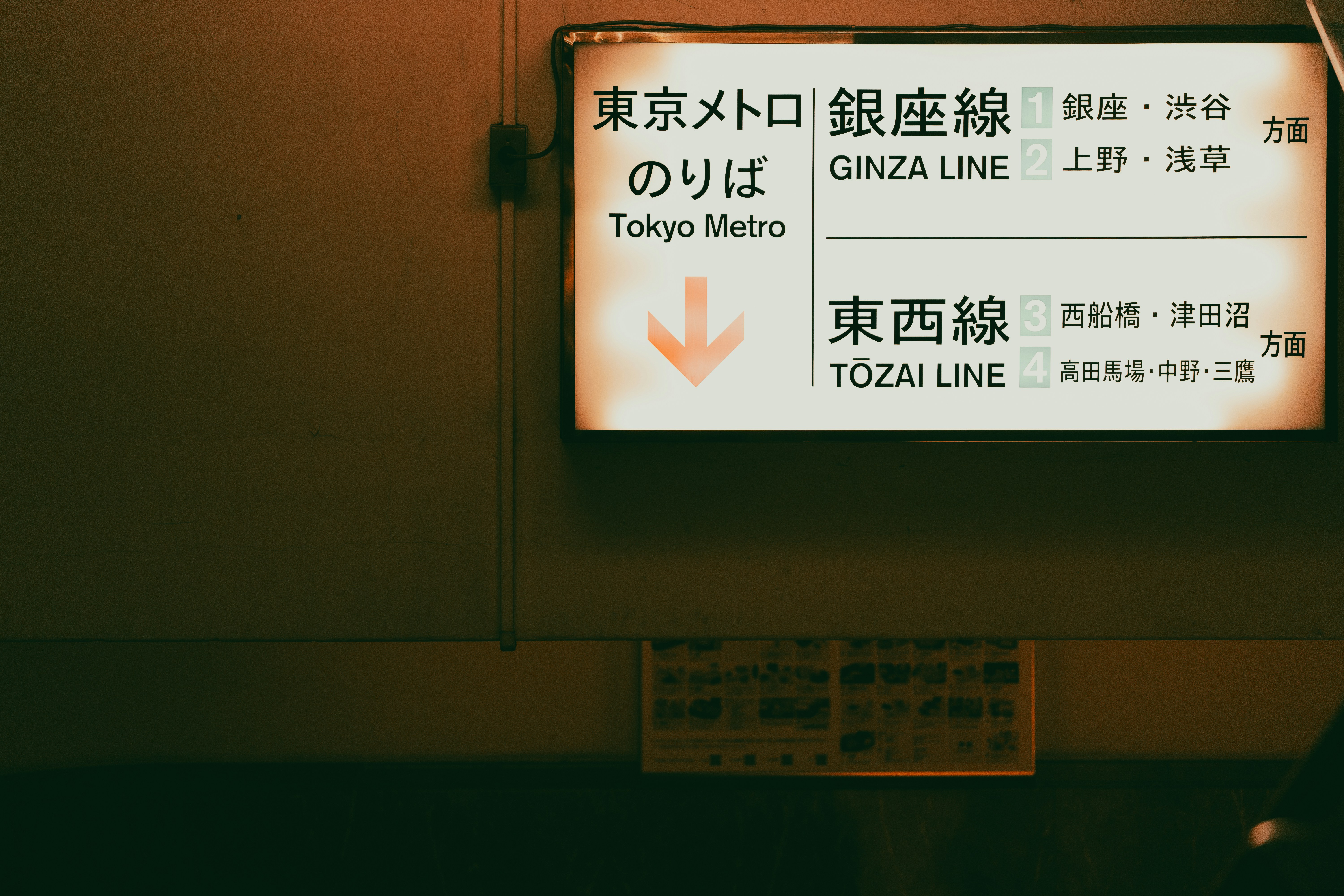
Nine subway lines covering central Tokyo. Color-coded and numbered (G for Ginza, M for Marunouchi, etc.). Runs underground. This is what you'll use for most sightseeing.
Toei Subway
Four additional subway lines run by the city government. Same feel as Tokyo Metro, different operator. Your IC card works on both — you won't even notice the difference.
JR・東京メトロ・都営地下鉄の3つが主要システム。ICカードがあればすべて乗れるので、違いを意識する必要はほぼありません。
The entire system runs from roughly 5:00 AM to midnight. Trains do NOT run 24 hours. Plan your last ride accordingly — missing the last train means an expensive taxi.
Google Maps works perfectly for Tokyo train navigation. Just type your destination, select "transit," and follow the directions. It shows exact platforms, transfer times, and costs. No special app needed.
02IC Cards: Suica & Pasmo
An IC card is a rechargeable tap-and-go card that works on every train, bus, and even at convenience stores (konbini), vending machines, and coin lockers. Suica (JR) and Pasmo (Metro) are the two brands — they work identically and are completely interchangeable.
How to get one
Buy a physical card at any ticket machine in Narita Airport, Haneda Airport, or any major JR/Metro station. Pay the ¥500 deposit, charge it with cash, and you're set. You can recharge at any station machine or konbini.
Digital option
If you have an iPhone 8+ or recent Android, you can set up a Suica directly in Apple Wallet or Google Wallet — no physical card needed. This works for foreign phones. Charge it with a credit card. This is the most convenient option by far.
SuicaはApple WalletやGoogle Walletに追加可能。海外スマホでもOK。クレジットカードでチャージできるので、現金不要で最も便利。
An IC card is basically mandatory for any visitor. Without one, you'll be buying individual tickets at machines for every single ride — a massive waste of time. Get one at the airport on arrival, or set up a digital Suica before you land.
03Key train lines for tourists
Tokyo has dozens of train lines, but as a tourist you'll use maybe 5 or 6 regularly. Here are the ones that matter:
Yamanote Line (JR)
The big circular loop. Hits Shibuya, Shinjuku, Ikebukuro, Ueno, Akihabara, Tokyo Station, and Shinagawa. This single line connects most major tourist areas. Trains come every 2-4 minutes. You'll use this constantly.
Chuo Line (JR)
Runs east-west through the center. Good for getting between Tokyo Station, Shinjuku, and western suburbs quickly. The orange "Rapid" version skips smaller stops.
Ginza Line (Tokyo Metro)
Oldest subway in Asia. Connects Shibuya, Omotesando, Ginza, and Asakusa. Great for moving between shopping areas and Senso-ji temple.
Marunouchi Line (Tokyo Metro)
Connects Shinjuku, Tokyo Station, and Ginza. Useful as an alternative to JR for east-west travel in central Tokyo.
Costs & day passes
Individual rides cost ¥170-320 depending on distance. For heavy sightseeing days, consider a day pass:
東京サブウェイチケットは東京メトロ+都営地下鉄が乗り放題。ただしJR線は含まれません。1日4回以上メトロに乗る日だけ元が取れます。
The Tokyo Subway Ticket covers Tokyo Metro + Toei Subway only — not JR lines. It's only worth buying if you'll take 4+ metro rides in a day. For most visitors, just using an IC card and paying per ride is simpler and often cheaper.
04Buses
Short answer: skip buses in central Tokyo. Trains are faster, easier to navigate, and run more frequently. Bus routes are confusing even for locals, and announcements are mostly in Japanese.
When buses make sense
A few areas have thin metro coverage where buses fill the gap — parts of Roppongi, some routes in Shibuya, and connections to attractions like TeamLab or Odaiba. Your hotel might also be easier to reach by bus from the nearest station.
How they work
Most Tokyo buses have a flat fare of ¥210 (adults). Board from the front, tap your IC card when you get on (or pay exact change). Tap again when you get off. Stops are announced in Japanese and sometimes English.
中心部ではバスよりも電車が便利。ただし六本木やお台場方面など、メトロでカバーしにくいエリアではバスが役立つ場合もあります。
Don't plan your itinerary around buses. Use them only when Google Maps specifically suggests one as the best route. Your IC card works on all buses, so no extra preparation needed.
05Taxis & ride sharing
Taxis in Tokyo are expensive compared to most Asian cities, but they're clean, safe, and the drivers are professional. Doors open and close automatically — don't grab the door handle.
When to use taxis
After midnight when trains stop running. When you're in a group (splitting the fare makes it reasonable). When you're lost or exhausted and just need to get back to your hotel. With luggage between stations and your accommodation.
Ride-sharing apps
Uber and the Japanese app GO are both available in Tokyo. They connect you to licensed taxis — not private cars like Uber in other countries. Prices are similar to street hailing. The apps are useful for the language barrier (you enter the destination in the app).
タクシーは終電後や荷物が多い時に便利。Uber・GOアプリで行き先入力すれば言語の壁も解消。チップは不要です。
Never tip taxi drivers in Japan. It's not expected and can cause confusion. The meter price is the final price. IC cards and credit cards are accepted in most taxis.
06Shinkansen & long distance
The Shinkansen (bullet train) is for day trips and traveling between cities. It's fast, comfortable, and punctual — but not cheap.
Key routes from Tokyo
JR Pass
The Japan Rail Pass gives you unlimited Shinkansen and JR rides for 7, 14, or 21 days. Sounds amazing — but the price was raised significantly in 2023. A 7-day pass now costs ¥50,000 (~$330). It's only worth it if you're taking 2 or more long-distance Shinkansen rides during the pass period.
Do the math
Tokyo → Kyoto round trip = ¥28,000. If that's your only long ride, the ¥50,000 pass loses money. But Tokyo → Kyoto + Kyoto → Hiroshima + Hiroshima → Tokyo = ¥60,000+, and the pass saves you real money.
JRパスは2023年に大幅値上げ。新幹線の長距離往復が2回以上ないと元が取れません。必ず事前に計算を。
Buy individual Shinkansen tickets if you're only doing Tokyo + one other city. Get the JR Pass only if your itinerary includes 2+ long-distance rides. Use our budget estimator to calculate which option saves you money.
07Common mistakes
These are the transport mistakes first-timers make most often in Tokyo. All are easy to avoid.
Buying a day pass when you don't need one
If you're only taking 2-3 train rides in a day, the ¥600 subway pass costs more than just paying per ride. It only saves money if you take 4+ metro rides.
Taking taxis for short distances
A 5-minute taxi ride costs ¥700-1,000. The same distance by train is ¥170. Taxis make sense late at night or with luggage — not for casual sightseeing hops.
Forgetting last train times
The last trains leave around midnight (varies by line and direction). If you're out drinking or at a late dinner, check your last train time in Google Maps. Missing it means a taxi ride that could cost ¥5,000-10,000.
Standing on the wrong side of the escalator
In Tokyo, stand on the left, walk on the right. (It's the opposite in Osaka.) This is taken seriously — standing on the wrong side blocks the flow and you'll get polite but firm looks.
よくある失敗:1日券の無駄買い、短距離タクシー、終電の見落とし、エスカレーターの立ち位置(東京は左に立つ)。
Set a "last train alarm" on your phone for 11:30 PM. This gives you time to check routes and get to the station. It's the single most useful habit for Tokyo nightlife.
SUMMARYDaily transport costs
Here's what you'll actually spend on transportation per day in Tokyo, based on different travel styles:
| Travel style | Daily cost | What that looks like |
|---|---|---|
| Budget | ¥500-800 | 2-3 train rides, staying in one area most of the day |
| Moderate | ¥800-1,500 | 4-5 rides, visiting 2-3 different neighborhoods |
| Heavy sightseeing | ¥1,500-2,500 | 6+ rides, hitting multiple areas, possibly a day pass |
For a typical 7-day Tokyo trip, budget ¥7,000-12,000 total for local transportation (~$45-80 USD). That's remarkably cheap compared to taxis in most major cities.
東京7日間の交通費目安は合計7,000〜12,000円。タクシー中心の他都市と比べると格安です。
Get an IC card, use Google Maps, ride trains. That's 90% of Tokyo transportation. Buses and taxis are edge cases. The system looks complex but works beautifully once you have a charged Suica in your pocket.
Figure out how many days you actually need in Tokyo and Japan.
Open Trip Days Planner →See how transport fits into your total Japan travel budget.
Open Budget Estimator →